

Table of contents
- How Prediction Markets Actually Work
- The Global Regulatory Landscape in 2026
- Building a Solid Compliance Foundation
- The Strategic Case: Why Brokers Are Moving Now
- Platform Requirements: What to Look For
- Frequently Asked Questions
- What licensing options are available for offering prediction markets in the US?
- Can I offer sports and political prediction markets globally?
- What compliance framework applies to crypto-settled prediction markets?
- How quickly can I launch a prediction markets platform?
- Why are institutional players entering prediction markets now?
- The Bottom Line
Estimated reading time: 8 minutes
Prediction markets have moved from the fringes of finance to the mainstream. In fact, they now represent one of the biggest opportunities brokerages face in 2026. Daily trading volumes surpassed $702 million in 2025. Moreover, major platforms like Robinhood and Webull are already offering event contracts to their users. As a result, the window for forward-thinking brokers to claim their share of this market is wide open.
KPMG’s white paper on prediction markets in the financial sector makes the case clearly. Brokers, banks, and asset managers should treat event contracts as a core strategic asset not a supplementary product. Furthermore, firms that integrate these instruments into their primary trading infrastructure today are positioning themselves ahead of the competition.
The regulatory picture is also solidifying. Across the US, UK, EU, Singapore, and Australia, clear compliance frameworks are taking shape. Consequently, brokers can now move forward without regulatory uncertainty holding them back.
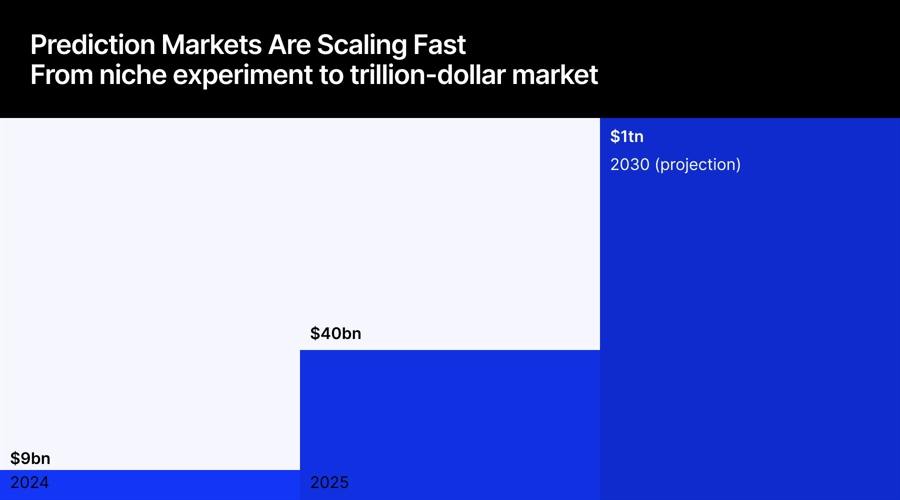
How Prediction Markets Actually Work
A prediction market is a derivatives market. Specifically, traders buy and sell contracts tied to the outcome of future events. Each contract is built around a simple binary question: Yes or No. If the specified event happens, the contract pays out. If it doesn’t, it expires worthless.
Consider questions like: Will the Federal Reserve cut rates before summer? Will Bitcoin hit $150,000 this year? Which team wins the championship?
This binary simplicity is precisely what makes prediction markets so powerful. Unlike complex derivatives, a yes/no question is immediately intuitive. Therefore, it opens the door to user segments that traditional forex and CFD instruments rarely reach. These include sports enthusiasts, crypto-native traders, and entertainment-focused audiences.
The Global Regulatory Landscape in 2026
Regulatory uncertainty is the most common concern brokers raise about prediction markets. However, the good news is that this uncertainty is rapidly dissolving. Below is what the landscape looks like across key jurisdictions.
United States
The US offers the most developed regulatory framework for prediction markets. The CFTC oversees event contracts traded on registered markets. Additionally, brokers have three well-defined routes to enter the space:
- DCM Designation (Designated Contract Market): Operating as a federally regulated exchange. Kalshi holds DCM status. Similarly, Polymarket US (QCX LLC) recently received an amended CFTC order of designation, opening access through Futures Commission Merchants.
- Introducing Broker (IB) Model: Registering as an IB and partnering with an existing CFTC-registered DCM. This is the fastest route to market. It offers lower barriers to entry and a proven compliance framework.
- Acquisition or Partnership: Partnering with or acquiring an already-designated DCM/DCO. For example, Polymarket’s acquisition of CFTC-registered QCX for $112 million signals how valuable regulated market access has become.
Product-level governance matters here too. CFTC Regulation 40.11 defines which event categories are eligible. Therefore, a structured product approval process helps ensure compliance before each market launches.
United Kingdom
The UK operates a pragmatic dual-track framework. On one hand, financial spread bets and derivatives fall under the FCA. On the other hand, non-financial event contracts covering sports, elections, and entertainment are regulated by the UK Gambling Commission (UKGC). Brokers can pursue the appropriate authorisation depending on their target market. Furthermore, the FCA and UKGC maintain a collaborative Memorandum of Understanding that keeps the framework coherent.
European Union
Under MiFID II, event contracts tied to recognised financial instruments are classified as financial instruments. Meanwhile, non-financial event contracts fall under member-state licensing regimes. For brokers using crypto settlement rails, the EU’s MiCA regulation provides a clear authorisation framework. As a result, operators can build compliant infrastructure with confidence.
Singapore and Australia
Singapore draws a clear line. Financial event contracts require MAS licensing. Non-financial contracts, however, require a licence from the Gambling Regulatory Authority. Similarly, Australia’s framework runs through the Interactive Gambling Act 2001. Both countries provide well-defined, navigable paths for compliant operators.
Building a Solid Compliance Foundation
A strong compliance framework isn’t just a regulatory requirement it’s a competitive advantage. Brokers who get compliance right from day one build lasting trust with traders and partners. Wisafy’s Legal Services are specifically designed to help brokers navigate licensing, AML, and cross-border compliance. The key areas to address are as follows.
KYC and AML
Robust identity verification satisfies regulators and builds trader confidence. In particular, platforms using crypto settlement should implement FATF-compliant KYC and sanctions screening from the outset. It is far easier to build these in early than to retrofit them later.
Market Surveillance
Proactive surveillance demonstrates institutional-grade operational maturity. This includes audit trails, insider trading monitoring, and manipulation detection. For instance, leading platforms like KalshiEX are already setting high standards in this area.
Product Governance
A structured product approval process ensures each market is compliant before it goes live. Specifically, this covers contract wording, resolution criteria, and settlement terms. As a result, brokers strengthen both regulatory relationships and long-term trader trust.
Consumer Protection
Responsible trading tools, age verification, and eligibility checks show a broker’s commitment to sustainable growth. Above all, these are qualities regulators across every jurisdiction actively look for.
The Strategic Case: Why Brokers Are Moving Now
The business case for adding prediction markets is compelling. According to KPMG’s analysis, standardised event contracts can transform brokers from product sellers into marketplace operators. In addition to traditional margins, this generates revenue from platform access, liquidity provision, and analytics.
Institutional momentum is accelerating. Jump Trading has begun making markets on Kalshi, becoming one of the first major prop firms to participate in event-based trading. Consequently, volumes surged past $7.4 billion in a single month. This is no longer fringe activity it is mainstream institutional finance.
Brokers who have already added prediction markets are reporting striking results:
- Up to 3x improvement in user acquisition rates compared to traditional instruments alone
- 85% better monthly retention driven by the intuitive nature of binary event contracts
- Projected 15–25% additional revenue from spreads, trading fees, and market creation activity
The reason is simple. A yes/no question is something anyone can engage with immediately. Therefore, it creates habitual engagement in ways that complex derivatives cannot replicate. And habitual engagement is what drives lifetime trader value.
The first-mover advantage is real and time-limited. Most brokers have not yet entered this space. However, as prediction markets become standard in the brokerage stack, early movers will capture disproportionate market share. If you’re still laying the groundwork, our guide on how to start a forex business in 2026 covers the foundational steps in detail.
Platform Requirements: What to Look For
Building a prediction markets platform from scratch typically takes 12 to 18 months. Moreover, it requires significant capital investment. White-label solutions, however, compress that timeline to days rather than months. Wisafy’s IT & Tech Services can help you evaluate and deploy the right infrastructure without building from scratch. When assessing any solution, these are the components that matter:
- Full Admin Controls: Market creation, rule editing, and resolution management through a central dashboard with complete audit trails.
- Advanced Order Book: Full depth ladder with limit and market orders, real-time charting, and transparent bid/ask spreads.
- Portfolio Dashboard: Comprehensive P&L tracking, position management, and trade history for full regulatory audit-trail compliance.
- Multi-Category Markets: Financial, crypto, sports, political, and entertainment markets subject to your licensing and local requirements.
- White-Label Branding: Your brand, your domain, your traders. The experience should build your equity, not someone else’s.
- Mobile-First Design: Responsive across all devices, because today’s traders expect seamless mobile as a baseline.
Furthermore, growing your user base once the platform is live is equally important. Wisafy’s Commercial Operations services cover performance marketing, affiliate programs, and multilingual support built specifically for financial businesses scaling globally.
Frequently Asked Questions
What licensing options are available for offering prediction markets in the US?
There are three clear pathways. First, direct DCM designation as a federally regulated exchange. Second, the Introducing Broker model, which partners with an existing CFTC-registered DCM for faster entry. Third, acquisition or partnership with an already-designated DCM or DCO. Overall, the IB model is most attractive for brokers seeking the fastest compliant route.
Can I offer sports and political prediction markets globally?
Yes, with the right licensing in place. In the UK, non-financial event contracts operate under UKGC gambling licensing. Singapore, on the other hand, falls under the Gambling Regulatory Authority’s framework. Either way, a structured product-level review ensures your categories align with local requirements before launch.
What compliance framework applies to crypto-settled prediction markets?
FATF-compliant KYC and sanctions screening provide a solid global baseline. In the EU, MiCA offers a clear authorisation framework. Additionally, OFAC guidance on wallet-level screening is well-documented and widely implemented. Together, these give operators a strong foundation for compliant crypto-rail infrastructure.
How quickly can I launch a prediction markets platform?
On the technology side, white-label solutions can be configured and branded in days. Regulatory timelines, however, vary by jurisdiction. US DCM designation takes between 6 and 52 weeks. UK or Malta gambling licences typically take 8 to 40 weeks. Nevertheless, the right platform means your technology is ready the moment your licence is approved.
Why are institutional players entering prediction markets now?
Several factors have converged. Proven volume growth, maturing regulatory frameworks, and robust infrastructure have built institutional confidence. As a result, Jump Trading’s entry into Kalshi alongside $7.4 billion in monthly volume signals that prediction markets have moved decisively from niche to mainstream.
The Bottom Line
Prediction markets represent a genuine inflection point for brokers and fintech businesses. The regulatory infrastructure is maturing. Institutional capital is flowing in. Meanwhile, trader demand is growing steadily. Therefore, brokers who act now will be best positioned to capture a meaningful share of this rapidly mainstreaming product category.
The binary simplicity of event contracts opens up entirely new trader demographics. The compliance frameworks are clear and navigable. The platform technology is ready to deploy quickly. Consequently, the only remaining variable is how fast you move.
The brokers who lead in prediction markets will be the ones who started before it became obvious that they should. Ready to explore your options? Get in touch with the Wisafy team for a free consultation.
Disclaimer: This content is provided for informational purposes only and does not constitute financial, legal, or investment advice. Always consult with qualified professionals before making business or investment decisions.

Leave a Reply